
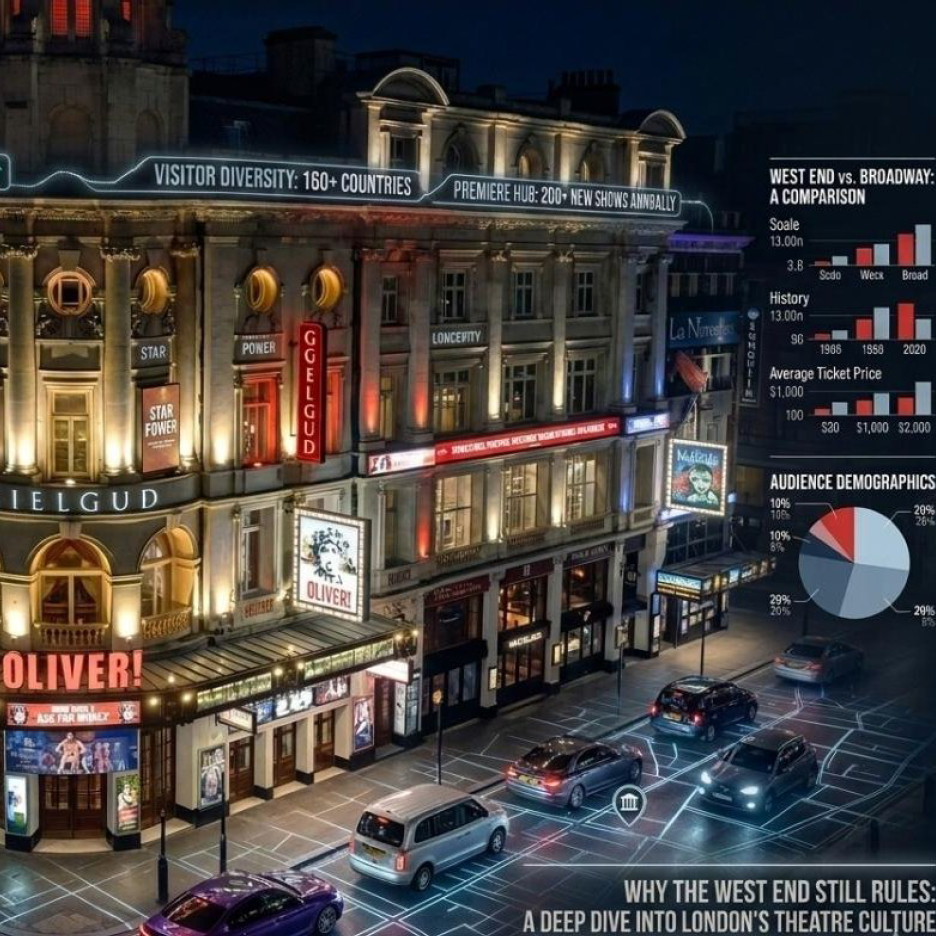
In a world overflowing with streaming platforms, social media content, and endless digital entertainment, one might assume that traditional theater would struggle to compete. Yet in the heart of London, the opposite is happening. The West End is not only surviving—it is thriving.
Five years after the pandemic disrupted live performances across the globe, London’s theater district has staged one of the most impressive comebacks in modern cultural history. Today, the West End stands stronger than ever, drawing millions of visitors and reaffirming its place as one of the world’s greatest entertainment destinations.
The numbers tell an extraordinary story. In 2024, more than 17 million people attended West End productions, surpassing pre-pandemic attendance levels and setting a new benchmark for live theater. At a time when many sectors of the entertainment industry continue to face challenges, London’s theater scene has demonstrated remarkable resilience.
What makes this achievement even more impressive is the changing nature of entertainment itself. Audiences today have countless options competing for their attention. Films can be streamed instantly, concerts can be watched online, and social media delivers a constant flow of content. Despite this, theater continues to offer something that technology cannot replicate: a shared human experience.
There is a unique magic in sitting among hundreds of strangers and collectively laughing, crying, gasping, or applauding at the same moment. Every performance feels alive because no two shows are ever exactly the same. That sense of connection remains one of theater’s greatest strengths.
The West End’s appeal extends far beyond local audiences. For international visitors, attending a London theater production has become almost as essential as visiting the city’s famous landmarks. Whether tourists come for history, shopping, or sightseeing, many choose to spend an evening immersed in the storytelling and creativity that define British theater.
This popularity has transformed the West End into a powerful economic engine. A theater ticket often represents much more than a night of entertainment. Visitors dine in nearby restaurants, stay in local hotels, shop in surrounding stores, and use public transport throughout the city. The result is a ripple effect that benefits countless businesses beyond the theater industry itself.
The influence of the West End also reaches far beyond London’s city limits. Its success supports a broader theater ecosystem across the United Kingdom. Regional theaters nurture emerging actors, writers, directors, designers, and technicians who often go on to contribute to productions in the capital. In many ways, the West End serves as the visible peak of a much larger creative network that spans the entire country.
Yet behind the glamour of opening nights and standing ovations lies a more complicated reality. Producing world-class theater has become increasingly expensive. Rising energy costs, higher operational expenses, and financial pressures affecting arts organizations have created significant challenges for theater owners and producers.
Many venues work tirelessly to keep ticket prices accessible while maintaining the high production standards audiences expect. Balancing artistic excellence with financial sustainability has become one of the industry’s biggest concerns.
Another important challenge involves the future generation of theater professionals. While audiences continue to return in large numbers, industry leaders recognize the need to inspire young people to consider careers in the arts. Theatre relies on far more than actors. Behind every successful production is a team of writers, costume designers, stage managers, lighting technicians, musicians, choreographers, and countless other specialists.
Creating opportunities for young people to discover these careers is essential if British theater is to remain globally competitive in the years ahead.
What makes the West End truly remarkable is its ability to evolve while preserving its traditions. Classic productions continue to attract audiences, while innovative new shows explore contemporary themes and reflect the changing experiences of modern society. This balance between heritage and innovation keeps theater relevant for each new generation.
The West End is more than a collection of theaters. It is a symbol of creativity, imagination, and cultural confidence. It showcases Britain’s storytelling talent to the world while providing a space where people from different backgrounds can share meaningful experiences.
As London continues to evolve as a global city, the West End remains one of its brightest cultural landmarks. Its stages tell stories, create memories, and bring communities together in ways few other art forms can achieve.
In an increasingly digital age, the enduring success of London’s theatre district proves something important: people still crave authentic experiences. And when the curtain rises in the West End, that experience remains as powerful as ever.