
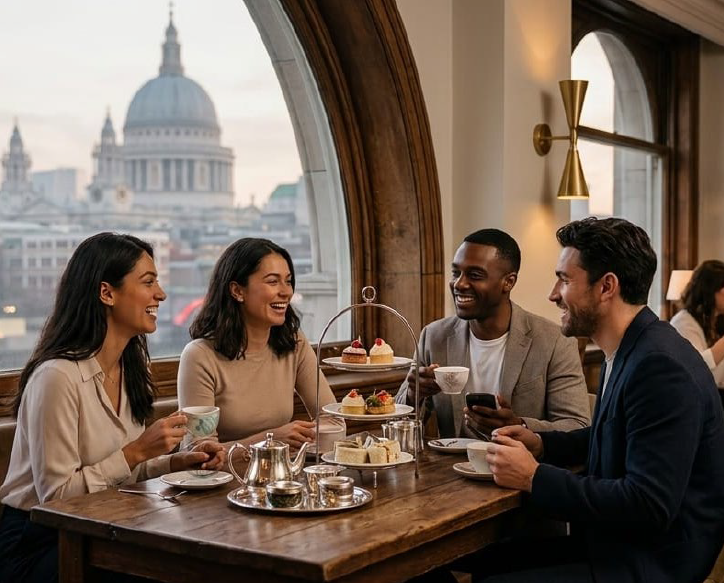
In a city known for its fast pace, crowded streets, and constant reinvention, one tradition has quietly stood the test of time. Long before social media trends, food influencers, and specialty coffee shops took over urban culture, London had already perfected its own ritual of slowing down: afternoon tea.
At first glance, afternoon tea may seem like a charming relic from another era, complete with fine china, elegant pastries, and carefully poured tea. Yet in 2026, this centuries-old tradition is experiencing a remarkable revival. Across London, luxury hotels, stylish tea salons, and even unconventional venues are reimagining afternoon tea for a new generation while preserving the elegance that made it famous.
Tea remains deeply woven into British life. Millions of cups are consumed every day across the United Kingdom, making it one of the country’s most enduring habits. While a quick cup of tea remains a daily comfort for many people, the ritual of afternoon tea has evolved into something more special—a celebration, an experience, and, for many visitors, an essential part of exploring London.
The origins of afternoon tea date back to the Victorian era. According to popular accounts, the tradition began in the 1840s when Anna, the Duchess of Bedford, found the long gap between lunch and dinner difficult to endure. To satisfy her hunger, she requested tea, light sandwiches, and sweet treats in the late afternoon. What started as a private habit soon became a fashionable social event among Britain’s upper classes.
Over time, afternoon tea developed its own etiquette, dress codes, and social customs. Gathering over delicate finger sandwiches, freshly baked scones, and elegant cakes became a symbol of refinement and hospitality. As the tradition grew in popularity, it moved beyond aristocratic drawing rooms and found a home in London’s grand hotels.
Today, some of the city’s most iconic establishments continue to serve afternoon tea much as they did decades ago. Guests can still enjoy tiered stands filled with pastries, warm scones served with jam and clotted cream, and carefully selected loose-leaf teas. These experiences offer a glimpse into London’s rich cultural heritage while providing a welcome escape from the rush of modern life.
What makes afternoon tea particularly fascinating is its ability to adapt. While traditional versions remain popular, many venues have embraced contemporary tastes and creative themes. Across London, chefs and hospitality experts are transforming the classic experience into something entirely new.
Some venues introduce international influences, incorporating Asian flavors, modern desserts, or innovative presentation styles. Others draw inspiration from fashion, art, literature, and even popular culture. The result is a dining experience that feels both timeless and current.
This blend of tradition and innovation perfectly reflects London itself. The city has always balanced respect for history with a willingness to embrace change. Afternoon tea has followed the same path, evolving without losing its identity.
For younger generations, afternoon tea has become more than a meal. It is an experience worth sharing with friends, family, and visitors. Birthdays, bridal celebrations, reunions, and weekend outings increasingly feature afternoon tea as a stylish alternative to conventional dining. Its appeal lies not only in the food but also in the atmosphere—a chance to pause, connect, and enjoy a slower pace of life.
Social media has also played a role in its resurgence. Beautifully presented cakes, elegant interiors, and artistic tea selections have helped introduce the tradition to a global audience. Yet despite its online popularity, the real attraction remains the experience itself. Unlike fast-food culture, afternoon tea encourages conversation, relaxation, and meaningful moments.
For tourists, it offers a uniquely British cultural experience. While London boasts world-famous landmarks and attractions, afternoon tea provides something more personal: an opportunity to participate in a living tradition that has been passed down through generations.
Perhaps that explains why afternoon tea continues to thrive in a city constantly looking toward the future. It combines history, hospitality, and indulgence in a way few traditions can. It reminds people that not every memorable experience needs to be fast-paced or digital.
In modern London, afternoon tea is no longer simply about drinking tea. It is about celebrating culture, craftsmanship, and connection. More than 180 years after its creation, this beloved ritual remains one of the city’s most elegant traditions—and one that shows no sign of disappearing anytime soon.