Walk through any London street, board a bus, or sit in a neighborhood cafe, and you will hear something remarkable. A conversation in Arabic blends into a greeting in Polish. A family speaks Bengali while children switch effortlessly between English and another language. Around the corner, a shopkeeper chats in Turkish, and students discuss their day in Spanish, Mandarin, or French.
This is modern London—a city where language is not simply a tool for communication but a living expression of culture, identity, and community.
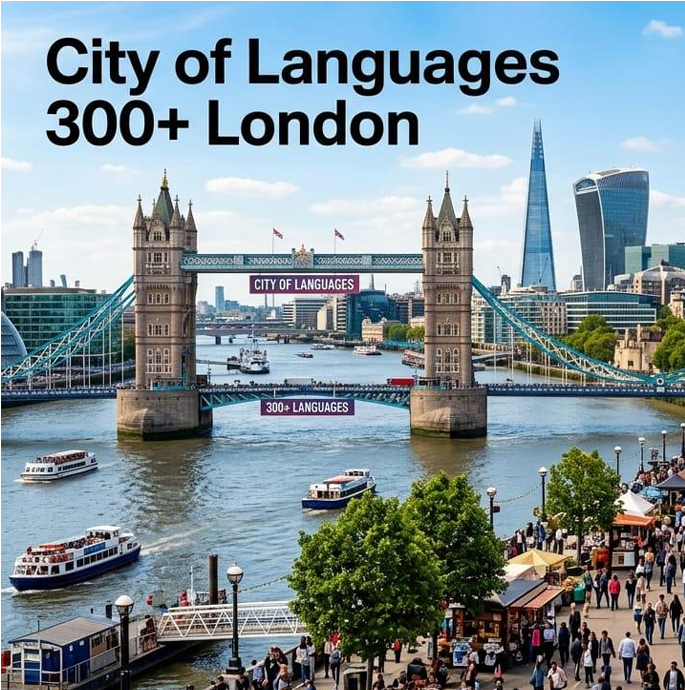
Often described as one of the most linguistically diverse cities in the world, London is home to more than 300 languages. While English remains the city’s common language, hundreds of others are spoken daily in homes, schools, workplaces, places of worship, and public spaces. Together, they create a rich cultural tapestry that reflects London’s global character.
For decades, multiculturalism in London has been visible through food, fashion, music, and festivals. Today, language has emerged as another powerful symbol of the city’s diversity. Rather than viewing multilingualism as a challenge, many educators, community leaders, and cultural organizations see it as one of London’s greatest strengths.
This belief inspired the launch of London: City of Languages in 2025, an initiative designed to celebrate the incredible range of languages spoken and studied across the capital. The project brings together schools, families, universities, teachers, and communities with a shared goal: to encourage language learning while recognizing the value of the languages people already speak.
The idea is simple but powerful. Every language carries stories, traditions, and ways of seeing the world. When languages are valued, people feel seen, respected, and connected to their heritage.
Across London, schools are increasingly embracing this philosophy. Children who grow up speaking languages other than English are encouraged to share their linguistic backgrounds with classmates. Language learning is no longer viewed solely as an academic subject but as a bridge between cultures.
This shift reflects a broader trend taking place across the United Kingdom. Cities such as Newcastle, Manchester, Portsmouth, Liverpool, and Leeds have launched their own language initiatives, recognizing multilingualism as a cultural asset rather than something that exists on the margins of society.
These projects celebrate the reality of modern urban life. Languages are woven into everyday experiences—from libraries and museums to local businesses, festivals, healthcare services, and community events. They help people maintain connections to their roots while building new relationships within diverse communities.
For young people especially, multilingualism offers opportunities that extend far beyond the classroom. Speaking multiple languages can improve communication skills, increase cultural awareness, and open doors to international education and careers. In an increasingly connected world, these abilities are becoming more valuable than ever.
Yet the benefits are not only practical. Language also plays an important role in confidence and belonging. For many families, hearing their home language recognized and celebrated helps strengthen identity and self-esteem. It sends a clear message that cultural heritage is something to be proud of rather than something to leave behind.
Perhaps this is why language festivals, competitions, and community events continue to grow in popularity. They transform language learning into something enjoyable, creative, and social. Whether through storytelling, music, art, theater, or cultural celebrations, they encourage people to explore cultures beyond their own experiences.
What makes London particularly special is the way these different voices coexist. The city does not ask people to abandon their identities in order to belong. Instead, it thrives because of its diversity. Every language spoken contributes another layer to London’s character.
In many ways, London’s multilingual landscape reflects the future of global cities. As migration, technology, and international connections continue to shape societies, the ability to understand different cultures becomes increasingly important. Language is one of the most effective ways to build that understanding.
The story of London is often told through its landmarks, history, and iconic skyline. Yet some of its most important treasures cannot be photographed. They are heard every day in classrooms, markets, train stations, homes, and neighborhood streets.
More than 300 languages. Countless stories. One city.
That is what makes London truly extraordinary—not just the diversity it contains, but the way it gives every voice a place to be heard.