
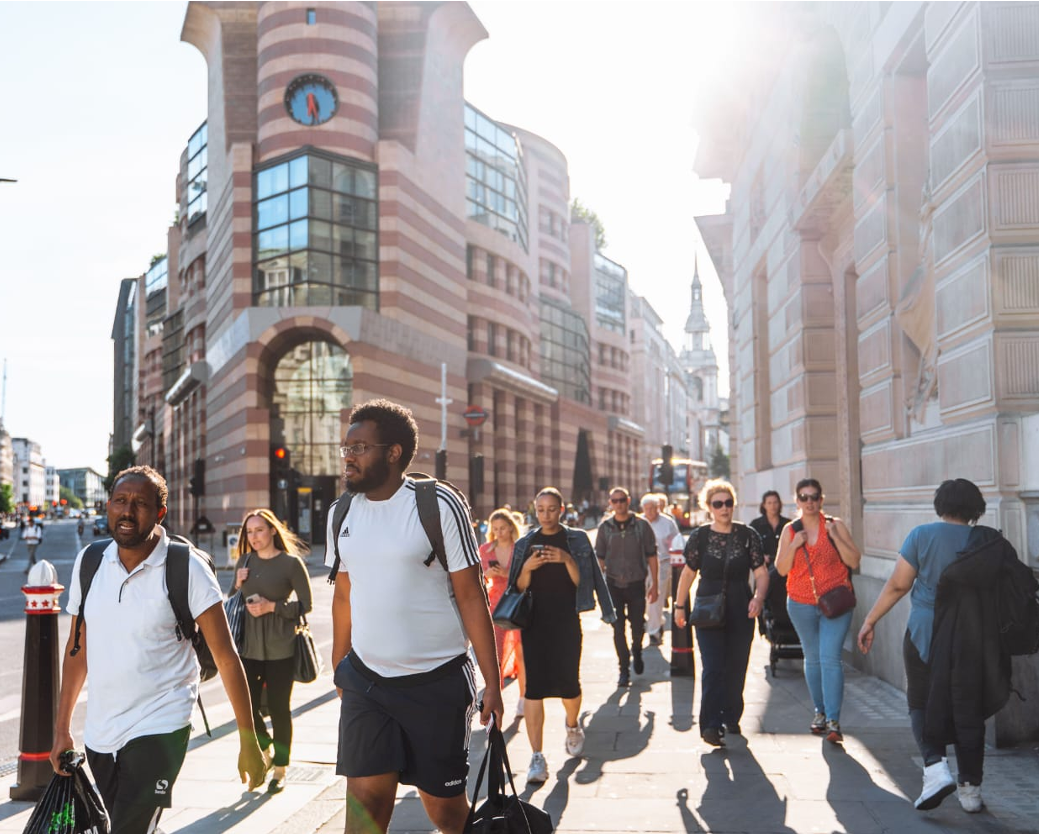
There was a time when visiting London felt like stepping into a world that was curious about the rest of the globe but had not fully embraced it. Today, that curiosity has evolved into something far more meaningful—acceptance, inclusion, and a celebration of differences that have become part of the city’s everyday life.
Few cities in the world have transformed as dramatically as London. Over the past three decades, it has grown from a largely traditional British capital into one of the most multicultural urban spaces on the planet. Walk through its streets today, and you will hear conversations in dozens of languages, discover cuisines from every continent, and witness cultures blending in ways that would have seemed remarkable just a generation ago.
In the 1990s, visitors from countries like India often attracted attention. People were curious about different customs, clothing, traditions, and even accents. Questions about bindis, Indian festivals, or why so many Indians spoke fluent English were common. Most of these interactions came from genuine interest rather than prejudice. London was beginning to understand multiculturalism, and its residents were slowly learning to appreciate cultures beyond their own.
Fast forward to 2026, and the city presents a completely different picture. Diversity is no longer a concept being discussed—it is a reality being lived. London’s population includes people from hundreds of nationalities and cultural backgrounds. In many neighborhoods, hearing multiple languages during a single bus ride is entirely normal. The city has become a place where different identities coexist naturally, contributing to a vibrant social fabric that feels uniquely London.
One of the most noticeable changes has been the visibility of cultural traditions. Celebrations such as Diwali, Eid, Chinese New Year, and Caribbean festivals have become major events that attract people from every background. What was once considered cultural diversity is now simply part of the city’s identity. Schools, workplaces, and community centers actively acknowledge and celebrate different traditions, helping younger generations grow up with a broader understanding of the world around them.
Food tells a similar story. London’s culinary landscape reflects its multicultural character. Traditional British dishes continue to hold their place, but they now share space with Indian curries, Turkish kebabs, Nigerian cuisine, Japanese ramen, Korean barbecue, and countless other global flavors. For many Londoners, exploring international food has become a routine part of life rather than an occasional experience.
The city’s changing attitude is also visible in its neighborhoods. Areas once associated with specific ethnic communities have become increasingly interconnected. Communities continue to preserve their cultural roots, but they are also more integrated into the wider life of the city. This blending of cultures has helped create stronger social connections and reduced the sense of division that existed in earlier decades.
Of course, no city is perfect. London still faces challenges, including housing pressures, economic uncertainty, and occasional social tensions. Like many global cities, it continues to navigate questions about immigration, identity, and equality. Yet what makes London remarkable is its ability to adapt. Time and again, it has shown resilience in the face of political change, economic disruption, and global crises.
Perhaps the greatest achievement of modern London is that diversity no longer feels extraordinary. It feels ordinary. A child celebrating Diwali at school, colleagues sharing food from different cultures, or friends speaking multiple languages in the same conversation are all part of daily life. These moments reflect a city that has moved beyond simple tolerance and towards genuine inclusion.
London’s story is not just about demographic change. It is about how people learn to live together, understand one another, and build communities that are stronger because of their differences. The city remains a global destination for tourists, students, professionals, and dreamers, but its greatest attraction may be something less visible: its openness.
As London continues to evolve, one thing is clear. Its identity is no longer defined by a single culture, language, or tradition. Instead, it is shaped by the countless stories, experiences, and communities that call it home. In a world that often feels divided, London offers a reminder that diversity is not a challenge to overcome—it is a strength to celebrate.