
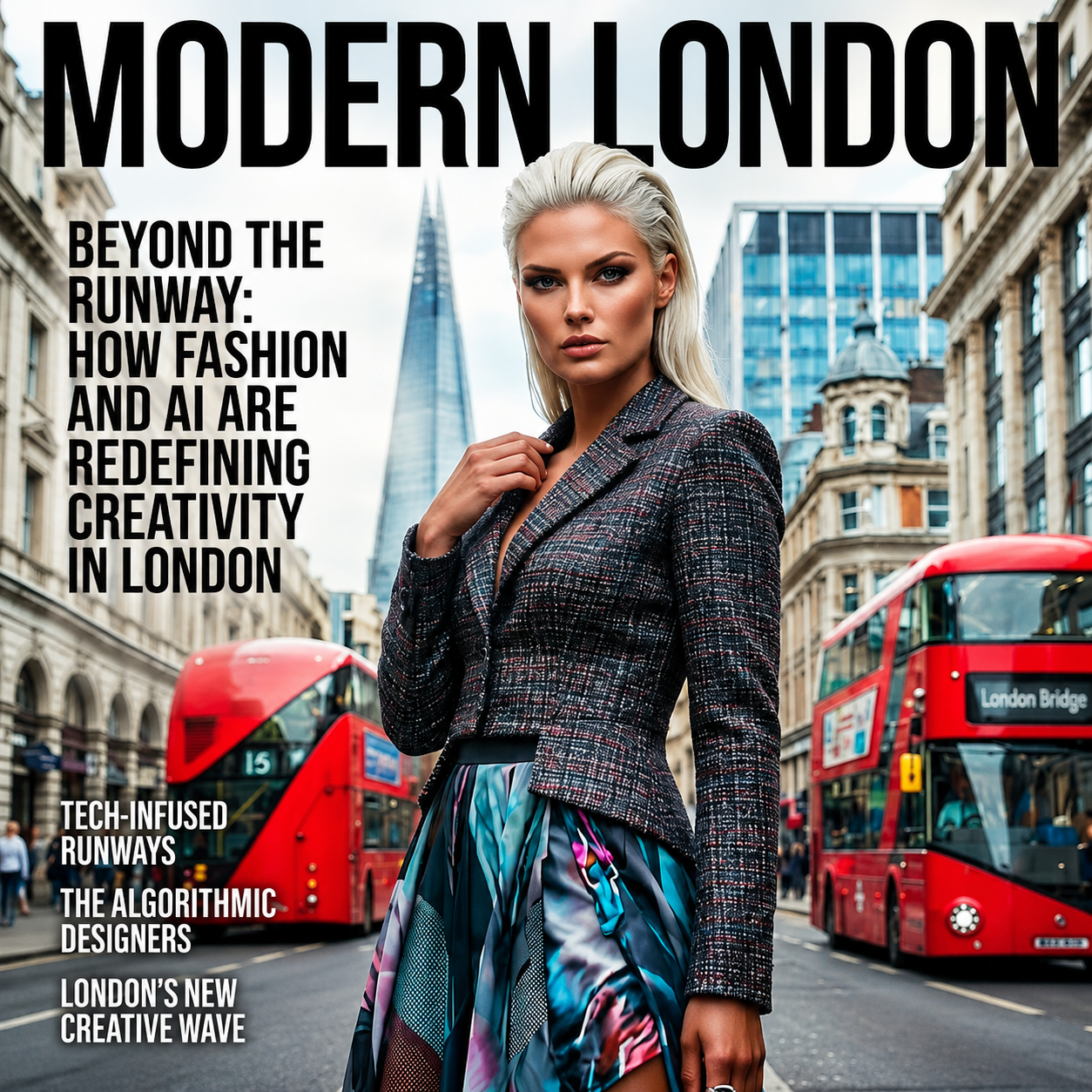
Cover Concept for Modern London
Fashion has always evolved alongside culture, technology, and society. From the invention of sewing machines to the rise of digital retail, innovation has continuously reshaped the industry. In 2026, however, the conversation entered a new chapter. Artificial intelligence is no longer viewed as a futuristic concept reserved for technology companies.
Instead, it is becoming an increasingly influential force within the fashion ecosystem itself, transforming everything from design and trend forecasting to production and supply chain management.
As the use of AI expands across the industry, a new question has emerged. Beyond what these technologies can achieve, how should they be developed and applied responsibly? It is a discussion that is rapidly gaining importance, particularly in London, where creativity and innovation have long gone hand in hand.
This growing conversation formed the foundation of this year’s Fashion AI symposium, organised by the FAIREE Hub at London College of Fashion, University of the Arts London. Bringing together researchers, designers, educators, technology specialists, and policymakers, the event explored the opportunities and challenges presented by artificial intelligence and examined how ethical frameworks can guide its future.
What became clear throughout the discussions was that artificial intelligence is no longer operating on the margins of fashion. It is steadily becoming part of everyday practice. Designers are using AI-powered tools to analyse trends and consumer preferences, helping them make more informed creative decisions. Supply chains are becoming increasingly data-driven, allowing brands to improve efficiency, reduce waste, and manage resources more effectively. In many cases, artificial intelligence is acting not as a replacement for human creativity but as a tool that enhances it.
Yet with these opportunities come important responsibilities. One of the central themes of the symposium focused on accountability. As algorithms begin influencing design processes and decision-making systems, questions surrounding transparency and governance become increasingly significant. Industry experts highlighted the importance of understanding how AI systems are built, who controls them, and how their outputs affect people across the fashion value chain.
Sustainability also emerged as a major topic of discussion. The fashion industry has faced growing scrutiny over its environmental impact, and many believe that artificial intelligence could play a valuable role in addressing these concerns. Advanced forecasting tools can help brands better predict demand, reducing overproduction and minimising waste. Smarter inventory systems can improve efficiency, while data analysis can support more sustainable sourcing practices. However, speakers stressed that technology alone cannot solve environmental challenges. Meaningful change requires responsible implementation and a broader commitment to sustainability throughout the industry.
Another issue attracting attention is the future of creative work. Fashion has always celebrated individuality, craftsmanship, and artistic expression. As AI-generated content becomes more sophisticated, concerns have emerged regarding originality, authorship, and the protection of creative identity. Rather than viewing technology as a threat, many participants argued that it should be treated as a collaborator, one capable of supporting creative exploration without replacing the human imagination that lies at the heart of fashion.
Labour and workforce transformation were also key areas of focus. As digital technologies become more integrated into production and business operations, the skills required across the industry are changing. Fashion professionals increasingly need to understand not only design and craftsmanship but also digital tools, data literacy, and emerging technologies. This shift is creating new opportunities while reinforcing the need for education and upskilling across all levels of the sector.
Equally important is the issue of cultural representation. Artificial intelligence systems rely heavily on the data they are trained on, and if that data lacks diversity, the outcomes can unintentionally reinforce bias or exclude certain perspectives. Experts at the symposium emphasised that responsible fashion AI must prioritise inclusivity and ensure that technological development reflects the diversity that defines global fashion culture.
Perhaps the most valuable aspect of the event was its interdisciplinary approach. By bringing together voices from research, business, design, education, and public policy, the symposium created space for meaningful dialogue. Rather than presenting artificial intelligence as either entirely positive or entirely problematic, participants focused on practical solutions and collaborative thinking. The goal was not simply to embrace technology but to shape it in ways that align with ethical values and long-term industry needs.
London has long been recognised as one of the world’s leading fashion capitals, celebrated for its creativity and willingness to challenge convention. Today, that spirit of innovation is extending into the digital realm. The city is becoming a hub for conversations about how technology and fashion can evolve together in a way that is transparent, inclusive, and socially responsible.
As artificial intelligence becomes more deeply woven into the fabric of the industry, the future of fashion will be defined not only by technological capability but also by the values that guide it. Creativity, sustainability, accountability, and human expression will remain at the centre of that journey.
Ultimately, the rise of fashion AI is not about choosing between innovation and ethics. It is about recognising that the two must move forward together. In a world where style increasingly meets science, London is proving that the future of fashion can be both intelligent and deeply human.